
Frequently Asked Questions
What is Scripophily?
What does "scripophily" mean?
Scripophily (pronounced scrip-AH-fi-lee) is the hobby of collecting antique stock and bond certificates. The word was coined in 1978 through a naming contest run by The Times newspaper. Arthur Howell of Brighton submitted the winning entry, combining "scrip" (an English term for a provisional certificate of ownership or subscription receipt) with the Greek suffix "-phily," meaning love of. Collectors of these certificates are called scripophilists.
How old is the hobby?
Collecting historical certificates dates back to the 19th century, when companies began issuing elaborate engraved documents to shareholders. The hobby gained widespread recognition in the 1970s, and today enthusiasts across the United States and around the world pursue it for the art, the history, and the stories behind each piece.
Who collects stock and bond certificates?
The collector community is broad. Financial advisors, investment professionals, historians, railroad enthusiasts, finance students, and anyone with an appreciation for American and world history all find something to love here. They also make exceptional gifts. Whether you are looking for something unique for a special someone or a fun bundle, there is something for everyone at Ticker History.
About Our Certificates
Are the certificates genuine or reproductions?
All stock and bond certificates are authentic historical documents. We do not sell reprints or replicas unless explicitly noted (such as our postcards and magnets).
Are they negotiable or worth anything on today's stock market?
No. These are strictly collectibles. They are not redeemable, do not represent current ownership, and carry no financial value on the stock market. Their value is historical, artistic, and collectible.
What is the difference between a stock certificate and a bond certificate?
A stock certificate represents equity ownership in a company. A bond certificate represents debt, meaning the holder lent money to the issuing company and was entitled to repayment with interest. In the collectibles market, bond certificates often trade at a slight premium since far more equity was issued over the years, making bonds relatively rarer.
What kinds of industries and themes do you carry?
We carry certificates and financial paper ephemera across dozens of industries including railroads, oil and gas, mining, banking and finance, aviation, technology, utilities, entertainment, real estate, and more. We also carry paper money, stocks, bonds, U.S. government and state bonds, and certificates from international markets.
How can I tell an authentic certificate from a reproduction?
Authentic certificates have a distinct feel and weight that reproductions rarely replicate well. Look for the name of the banknote company that printed it, typically engraved or printed in small text near the bottom of the document. The most common printer of American certificates was the American Banknote Company. Elaborate intaglio engraving, period-appropriate paper, and consistent aging throughout the document are all good signs of authenticity.
Collecting and Value
What makes one certificate more valuable than another?
Several factors drive value: the quality and detail of the vignette (the engraved illustration), the era it was issued, who it was issued to, notable signatures, and overall condition. A common railroad certificate from the 1960s might sell for under $20. A certificate from a historically significant company with a strong vignette and excellent condition can reach $500 or more. Certificates with exceptional provenance can go far higher. For example, an original Standard Oil trust certificate issued to and signed by John D. Rockefeller can command thousands of dollars.
Are some certificates more common than others?
Yes. Industries that required a lot of shareholder capital over the years (railroads, airlines, large mining operations) issued enormous quantities of certificates, which makes many of those more available and generally less expensive. Rarer companies, limited runs, and unusual subject matter tend to attract stronger collector interest.
Is there a price guide for scripophily?
There is no single definitive price guide. The best way to understand current market values is to browse active inventories. We carry hundreds of items across a wide range of price points. Our Premium Picks collection is a good place to start for seeing what the higher end of the market looks like.
Can I request a specific serial number or signature?
We cannot guarantee specific details, but you are welcome to reach out and we will check available inventory.
Care and Preservation
What is the best way to store a certificate?
Store certificates flat in acid-free sleeves or holders. Rigid plastic cases and art binders designed for archival storage work well for protecting pieces long term. Keep paper documents away from humidity, heat, and anything that could cause acid transfer or physical damage.
What should I avoid?
Direct sunlight is the most common cause of fading and paper degradation. Even indirect UV exposure over time can wear on the paper and ink. Folding is the other major risk: once a fold is set in aged paper it is very difficult to reverse. All of our certificates ship flat for this reason.
Should I try to restore a damaged certificate?
We generally advise against DIY restoration. Improper cleaning, pressing, or treatment can permanently damage paper documents. If you have a piece of significant value, consult a professional conservator.
What about framing?
Framing is one of the best ways to enjoy and protect a certificate at the same time. Use UV-protective glass and acid-free matting and backing. Avoid standard hardware store glass, which does not filter UV light. We share our recommended framing resources on our Materials and Care page.
Gifting
Do these make good gifts?
They make exceptional gifts, especially for people who are hard to shop for. A one-of-a-kind historical document is something most people have never seen before, let alone owned. Our customers buy for birthdays, anniversaries, holidays, graduations, Father's Day, and just because.
What are your most popular gift options?
Our Monopoly Railroad Bundle is one of our most gifted items. We also carry a Railroad 5-Pack Bundle and a New York Starter Pack for those looking for a curated set. For a truly one-of-a-kind gift, browse our full collection and find something specific to the person you are shopping for.
Do you offer gift wrapping or notes?
We do not currently offer gift wrapping, but we are happy to include a handwritten message if you are sending a gift.
Do you offer bulk or wholesale pricing?
Yes. We work with designers, shops, dealers, and anyone looking to buy in volume. Reach out for pricing on large or themed orders.
Shipping and Returns
How do you ship the certificates?
All items are shipped flat in rigid, protective packaging and never folded unless a fold already exists. We ship via USPS within the U.S. and offer free shipping on all orders over $50. All orders include insurance. Orders over $500 are upgraded to fully insured shipping via the fastest available courier (UPS, FedEx, DHL, or USPS) based on your location.
What is your fulfillment time?
We strive for same-day shipping Monday through Friday. Most orders ship within 1 to 2 business days out of New York, NY.
How much does shipping cost?
Shipping rates are calculated at checkout based on your location and selected method. Orders over $50 ship free within the U.S.
Can I return my purchase?
Yes. We accept returns within 30 days of delivery. Items must be returned in their original condition. Please contact us before returning your order.
Buying and Selling
Do you buy old stock and bond certificates?
Yes. We are always looking for interesting inventory, whether it is a single certificate or an entire collection. We work with estate sales, auction houses, private collectors, dealers, and liquidators of all kinds. Learn more about selling to us.
Can you help identify or value a certificate I already own?
We do not offer formal appraisals, but we are happy to help identify what you have and share historical context where we can. Contact us with as much detail as you have.
More Scripophily Resources
View all-
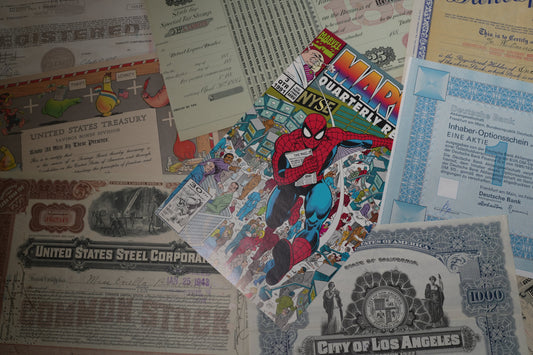
Authentic Stock Certificate Gifts For Nerds
Nerd used to be an insult. Now, it’s a point of pride- being a book, video game, movie, computer or sports nerd means you’re knowledgeable and passionate about your subject....
Authentic Stock Certificate Gifts For Nerds
Nerd used to be an insult. Now, it’s a point of pride- being a book, video game, movie, computer or sports nerd means you’re knowledgeable and passionate about your subject....
-
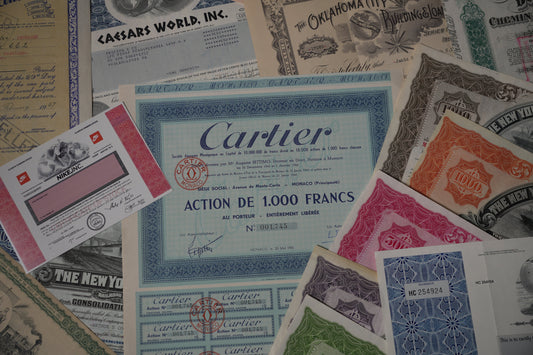
The Most Interesting Collectible You've Never H...
You’ve probably got a collection of baseball cards and comic books from when you were a kid. Maybe you even have action figures, Pokemon cards, or other sports memorabilia. Collecting...
The Most Interesting Collectible You've Never H...
You’ve probably got a collection of baseball cards and comic books from when you were a kid. Maybe you even have action figures, Pokemon cards, or other sports memorabilia. Collecting...
-
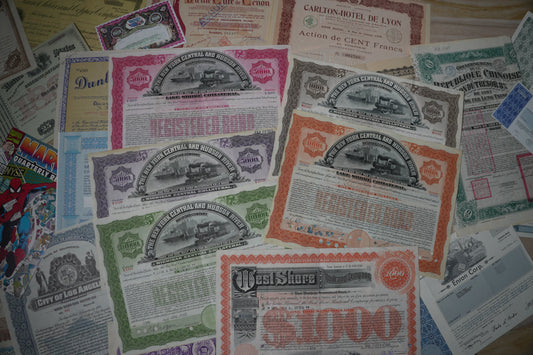
Scripophily FAQs: Your Guide to Collecting Stoc...
Welcome to the world of scripophily- where old stocks and bonds aren’t just financial papers, but pieces of history and art. Whether you’re a seasoned collector, a history buff, or just...
Scripophily FAQs: Your Guide to Collecting Stoc...
Welcome to the world of scripophily- where old stocks and bonds aren’t just financial papers, but pieces of history and art. Whether you’re a seasoned collector, a history buff, or just...
